
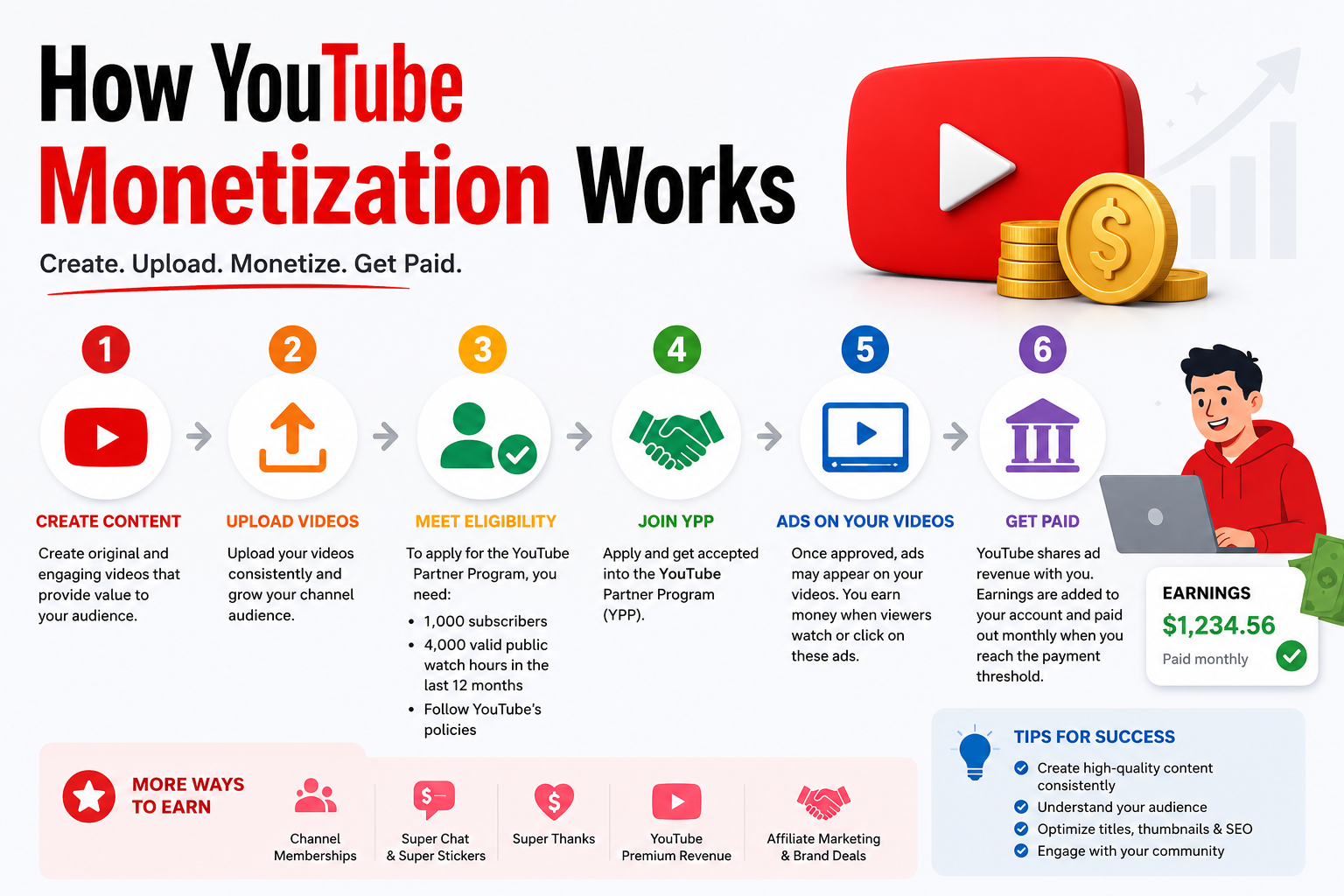
In the dynamic realm of digital content creation, understanding YouTube monetization has become essential for aspiring creators and seasoned professionals alike. As a platform that has revolutionized how you share and consume video content, YouTube offers a unique opportunity to turn your passion into profit. This article delves into the intricate mechanisms of YouTube’s monetization process, guiding you through the various avenues available for generating income. Whether you are an emerging influencer eager to explore new revenue streams or a seasoned creator looking to optimize your earnings, comprehending these monetization strategies is crucial for maximizing your channel’s potential.
How to Qualify for YouTube Monetization
Understand the YouTube Partner Program Requirements
To begin earning from your YouTube channel, understanding the requirements of the YouTube Partner Program (YPP) is crucial. Eligibility criteria include garnering 1,000 subscribers and achieving 4,000 watch hours within the past 12 months. Alternatively, accumulating 10 million views on Shorts within 90 days also meets the criteria. Beyond these metrics, content originality and adherence to YouTube’s policies are paramount. The platform emphasizes creating engaging and original content while steering clear of controversial or hateful material. Non-compliance, including repetitive or mass-produced content, could jeopardize your monetization potential, so it’s essential to familiarize yourself with YouTube’s stipulations regarding content.
Establish an AdSense Account
Linking your channel to an AdSense account plays a pivotal role in the monetization process. Without it, receiving revenue from ads shown on your videos isn’t possible. Moreover, ensuring two-factor authentication is enabled adds a necessary layer of security to your account. Once the program’s requirements are fulfilled, address and identity verification become the next step, followed by reaching the $100 revenue threshold for payment distribution through AdSense.
Maintain Channel Activity and Engagement
Staying active and fostering a thriving community around your channel are equally important. YouTube reserves the right to revoke monetization privileges if a channel is stagnant for over six months. Hence, maintain a consistent upload schedule and engage your audience creatively to solidify your monetization status. Utilizing tools such as TubeBuddy can be beneficial in analyzing performance metrics and optimizing your content strategy as recommended by experts.
Do You Need 1,000 Subscribers on YouTube to Monetize?
Understanding the 1,000 Subscriber Myth
While conventional wisdom suggests that reaching 1,000 subscribers is crucial for YouTube monetization, this is not the whole truth. To access YouTube’s full monetization features, such as ad revenue through the YouTube Partner Program, channels must meet specific requirements. These include having 1,000 subscribers and either 4,000 watch hours in the past 12 months or 10 million Shorts views in the last 90 days. However, earning on YouTube is not solely dependent on these metrics.
Alternative Monetization Strategies
Even without the benchmark of 1,000 subscribers, creators can still monetize their YouTube channels through various methods. Engaging content that addresses audience pain points can be highly effective. By offering value, creators can sell products or services directly to viewers. Market research and understanding audience needs allow for strategic content creation that attracts attention irrespective of subscriber count.
Other Ways to Earn Income
Building an email list by offering lead magnets like eBooks or consultations can drive viewer interaction and subsequent off-platform sales. These alternative strategies enable creators to generate income without relying solely on the traditional YouTube Partner Program or waiting for subscriber milestones. Thus, while 1,000 subscribers add value to your YouTube goals, they are not an absolute necessity for generating revenue.
Understanding the YouTube Partner Program and Its Benefits
Overview of the YouTube Partner Program
The YouTube Partner Program (YPP) is a vital gateway for content creators aiming to monetize their passions. It provides creators with tools and resources to both protect their content and maximize their earnings on the platform. One of the key benefits is the array of monetization options: from ad revenue on videos and a share of YouTube Premium subscriber fees to innovative features such as Super Chat, Super Stickers, and channel memberships. By joining the YPP, creators also gain access to advanced analytics and community support, enhancing their ability to strategically grow their channels.
Eligibility and Application Process
To join the YPP, creators need to meet specific eligibility requirements, such as having at least 500 subscribers and achieving 3,000 valid public watch hours or 3 million public Shorts views within the last year as outlined by YouTube’s criteria. Aspirants must apply through YouTube Studio, adhere to program terms, link an AdSense account, and undergo a channel review to ensure compliance with YouTube’s guidelines. Once accepted, creators can unlock further monetization features by reaching higher thresholds.
Enhanced Community and Support
The YPP bolsters a sense of community among creators, providing exclusive access to events, resources, and guidance from partner managers. This program not only supports creators financially through monetization avenues but also fosters an environment of growth and connection within the creator community. For those interested in expanding their reach and generating income, understanding how YouTube monetization works through the YPP can be a transformative step in their creative journey.
How Much Does 1,000 Views Pay on YouTube?
Earnings Per Thousand Views
On YouTube, earnings per 1,000 views can fluctuate significantly due to various factors. As a rule of thumb, creators earn between $1 to $10 per 1,000 views, depending on a metric known as RPM (Revenue Per Mille) according to the reporting by Stan Store. This RPM is influenced by channel niche, audience location, and viewer engagement—all vital components in determining your earnings. For instance, finance or technology channels often command higher rates, ranging from $4 to $15 per 1,000 views, while entertainment or gaming channels may fetch $0.50 to $4.
Factors Influencing Payouts
Further contributing to the varying payouts are factors such as video length, audience demographics, and time of the year. Videos that are longer can hold more advertisements, thus potentially increasing earnings. Higher engagement and audiences from lucrative markets like North America, the UK, and Australia, further boost a creator’s revenue as explained by LiveReacting.
Strategies to Optimize Earnings
To maximize earnings from YouTube monetization, focus on high-quality content in niches with higher CPM (Cost Per Mille). Creators are encouraged to enhance video engagement and reach by optimizing titles and descriptions, promoting content on social media, and interacting with viewers. These strategies help content creators pack a powerful punch with each upload, effectively leveraging YouTube’s monetization system to its fullest potential as suggested by sources like Reddit’s YouTube partner insights.
How Many YouTube Views Do You Need to Make $2,000 a Month?
Key Metrics for YouTube Earnings
To understand how many views are necessary to earn $2,000 a month on YouTube, it’s crucial to grasp the core metrics of YouTube monetization. Primarily, creators earn through AdSense, where revenue depends on metrics like CPM (Cost per Mille) and RPM (Revenue per Mille). The CPM represents how much advertisers pay for 1,000 ad impressions, while RPM shows the revenue a creator earns per 1,000 views. Both values fluctuate based on niche, audience engagement, and other factors influencing advertising rates according to Riverside.
Estimating View Requirements
A rough estimate suggests needing between 400,000 and 650,000 views per month to achieve $2,000, assuming an average RPM of around $5 as highlighted by WAMM Promotions. This estimate pertains to channels with substantial watch time and consistent viewer engagement. Other estimates point towards needing about 36,562 views per day when aiming for high engagement rates, which emphasizes the diversity of factors affecting earnings as explained by Reddit.
Enhancing Revenue Streams
While having a certain number of views is essential, diversifying income sources can optimize earnings. Creators can explore sponsorships, merchandise, or memberships to reach or enhance the $2,000 monthly goal. Engaging with diverse revenue strategies is integral to overcoming the variability in ad revenue, ensuring sustained financial growth on YouTube. This approach is affirmed by Project Life Mastery, which emphasizes the importance of backend monetization to boost earnings effectively.
By focusing on these strategies and metrics, your journey toward making $2,000 a month on YouTube becomes more attainable and structured.
Following the YouTube Community Guidelines for Monetization
Understanding Community Guidelines
Monetizing your YouTube content successfully starts with a comprehensive understanding of the platform’s Community Guidelines. These guidelines not only ensure a secure and welcoming environment for all users but also set clear expectations for content creators aiming to generate revenue. Core to these standards are policies prohibiting hate speech, harassment, misinformation, and other harmful content types, which, if violated, could hinder your monetization efforts.
Adhering to Content Authenticity Standards
Beyond the general community stipulations, content authenticity remains a crucial aspect of YouTube monetization. To this end, YouTube requires that the content be original and reflect the creator’s own work, avoiding any inauthentic or repetitious material, to qualify for monetization as noted by YouTube’s updated policies. Channels are evaluated on various factors, including thematic consistency and originality, to ascertain adherence to these policies.
Complying with Advertiser-Friendly Guidelines
For creators to optimize earnings, it is vital to produce content that aligns with YouTube’s Advertiser-Friendly Content Guidelines. This includes ensuring your videos are suitable for a wide range of advertisers, avoiding content that could be deemed inappropriate or offensive. Successfully navigating these guidelines maximizes the potential for ad revenue and enhances the sustainability of your channel’s monetization strategy.
FAQs About YouTube Monetization: Your Key Questions Answered
What Is YouTube Monetization?
YouTube monetization refers to the process by which creators earn revenue from their video content. This is achieved through various means such as ad placements, fan funding, and merchandise sales. To participate, creators join the YouTube Partner Program, which allows them to incorporate ads into their videos, offer channel memberships, and engage with fans through features like Super Chats.
How Can You Start Earning Money?
To begin monetization, creators must meet specific eligibility criteria, including having at least 1,000 subscribers and 4,000 watch hours on their channel within a year. These benchmarks have been established to ensure that content creators are serious and committed to maintaining their channels. Once these requirements are met, creators can apply to the YouTube Partner Program, where each channel undergoes a review to ensure compliance with YouTube’s policies, including its Community Guidelines and Terms of Service.
Are Ads the Only Source of Income?
One common misconception is that ad revenue is the sole path to earning on YouTube. However, there are several lucrative alternatives. Creators can earn through channel memberships, allowing fans to pay a monthly fee for exclusive content, and through interactive features like Super Chats during live streams. Additionally, merchandise shelves beneath videos offer an avenue for selling branded products directly.
By understanding these aspects of YouTube monetization, creators can better navigate and optimize their earnings from the platform.
Conclusion
In understanding YouTube monetization, you unlock a world of opportunities where creativity meets commerce. By navigating the intricacies of AdSense, channel memberships, and merchandise shelves, you can transform your passion into a sustainable venture. As you refine your content strategy and engage your audience, remember that success hinges on authenticity and consistency. The path to monetization may be nuanced, but with dedication and informed decision-making, you can harness the power of YouTube to achieve your financial goals. Embrace the journey, innovate continuously, and let your unique voice resonate across the digital landscape, ensuring your channel’s growth and prosperity.